

THANK YOU FOR SUBSCRIBING
A featured contribution from Leadership Perspectives: a curated forum reserved for leaders nominated by our subscribers and vetted by our Manufacturing Technology Insights Advisory Board.

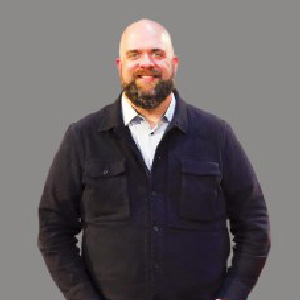
Since joining Ford Motor Company in 2016, Scott Anderson has managed several design teams through the production design process for SUV/Truck interiors as part of Truck Studio Design Team Bronco Sport and Ford Maverick. He has led the team through human-centered design processes, starting from foundational customer research and building unique user experience content for interior design. He has also been involved in managing several design teams through scale, and full-size clay development, 3D surface development, 3D printed models and a full running prototype design exterior and interior property for demonstration of concept.
Scott is an Adjunct Faculty in College for Creative Studies mentoring and educating future transportation and vehicle designers emphasizing on design as fine art and engineering integration, system level thinking, sustainable design techniques, and project-based learning.
In an interview with Manufacturing Technology Insights, Scott Anderson, Interior Design Manager at Ford Motor Company, talks about the trends in automobile interior designing and how the new 2022 Ford Maverick will feature customization options leveraging 3D printing, supported by the new Ford Integrated Tether System (FITS).
What Were the Challenges you Have Faced in the Manufacturing Industry?
We had a lot of manufacturing challenges when we were in to FITS (Ford Integrated Tether System). We were looking at leveraging advanced manufacturing, RP (rapid prototyping), and 3D printing to enable much more flexibility on shaping factors of geometry. It is an interesting premise because at first, we put on clay models and prototypes in the studio and got into intense negotiation with our engineering partners and PD teams to understand how to mold these into the plastic of the product part. Our console engineer was helpful at getting us through with parting line edges and simple designs that could be made to work in an injection molder with high volume capacity. It was all a fun process though.
Could you Elaborate on your Journey within the Manufacturing Space?
It has been a long road. I started with an engineering background but went back to school in 2000 to become an industrial designer at College for Creative Studies (CCS). I worked with a few companies before joining Ford in 2016, working on projects like Broncos and now finally with Maverick as a designer. My engineering background has helped me back up my design knowledge. It has been particularly helpful on the Maverick program with a lot of design manufacturing reductions to bring down cost and enhance the value of the plastics in the interior. I was very interested in things to do with the plastic-like textured-speckled finish on the surface for more visual interest, working with the PDP to create a design that gives customers the flexible space to do things and customize at the same time, making sure it was applicable for high volume injection molding.
Over the years, I’ve seen a lot of changes in what I do for a job role. For the last 15 years, I’ve been a designer, but I’ve had a technical background before that, which has really served me well in my job function.
How did you Come up with This Idea?
We do a lot of research, on our customer base, during the early stages. One of the significant things we gathered through research is that customization according to users is making the vehicle their own. We started working on making things modular and plug and play to make things that people could change on their own. The FITS slots can be used as a device to enable simple customization without fasteners or special tools by just sliding it into the spot.
The idea behind FITS slots is ingenious and adaptive, and that is what gets customers to the Mavericks.
How do you Plan to Scale FITS?
We have great interest from customers to make their own things and for an open-source set of data. We’ll have a QR code that will take you to the website to download the FITS and make your own parts. That can potentially be an open platform for people to share or even sell or make a small business out of.
Essentially, it is parts that you can slide into the Ford Maverick that make it more customizable. Some of these parts are available for purchase through Ford, and many of them are able to be 3D printed with the slot geometry that Ford will be sharing to the QR code that is in the Mavericks FLEXBED. So if you are into 3D printing, you can go to the website to download the FITS and make your own parts on your own time and print out whatever accessories that you like. This can potentially be an open platform for people to share or even sell or make a small business out of.
" You can download the FITS app from our website and make your own parts in your own time and print out whatever accessories you like. "
Ford accessories might start making special elements down the road based on the customer needs. Moving forward, more and more people will want to customize and individualize their vehicles. We also hope to trigger interest with the initial set of things we have made. With the 3D printing aspect of it, users can make their own special elements for customization at home. That is what we are stretching for.
To What Extent is this Customizable?
The sky is the limit on color choice if you can imagine printing your own or even have a file you send to a company to print for you. The user can pretty much make any pallet they like or want.
There are also other things like some of the pieces on the instrument panel that could be rubberized, 3D printed orange or made into customizable storage pockets and bends, or even put your name or logo, or your favorite sports team on a specific item and make your own custom accessory.
This is just the beginning of something we have created in our Ford catalog, and as an interior designer, I am keen to take it to other places too. We are looking at all kinds of possibilities for customization and cargo management systems.
What is your Vision for the Company as well as the Designing Industry at Large?
As I’m only one part of the system, I can’t speak for the whole company. One thing I can vouch for is that we at Ford have a vision of being customer-focused. That’s really important to us as a design organization. We pay attention to how people use the products and make sure to give the user the feeling when they are inside a Ford interior- that we thought about them and how they would use that interior. That is what we are passionate about.
Secondly, Ford has always been very purposeful and ingenious with how it brings products to the market. We keep pushing from our end what we can do better for our consumers. We believe in doing more with less and being smart and intelligent about how we apply and present our molded technologies and plastics to the customer. Fit slots are a good example of that, where it’s a fairly simple item, but with a very specific shape to help lock things in as it’s molded right into the geometry of the plastic. It is low cost, simple, easy to do, and manage technically but gives the customer an opportunity to customize their vehicle and be flexible with the storage space more than ever before.
We also acknowledge the fact that we are building a platform for people to be creative. That’s really important, especially in the truck space, because truck people tend to be makers for doers, and they think from that viewpoint. Products for them have got to be purposeful and intentional, and that was a big part of how we sorted through Maverick interior designs.
What Advice would you Give to Young Professionals Looking to Embark on the Same Journey as you have?
I would advise them to keep an open mind. They should be able to think laterally and creatively. What is important, especially in the automotive sector, is to take inspiration from what is outside of the automotive space.
I also teach transportation design at CCS in Detroit. So whenever I am with students, I always remind them that inspiration can come from anywhere. It is also important to find the right education path for you. For the growth of the designer in you, it’s important to challenge yourself and keep your eyes open to different inspirations outside of the product you are building. The best ideas come from an amalgamation of two existing things put in a new way. There are times when all kinds of other things like fashion and architecture serve as kernels of ideas that bring out a new perspective. So it’s important to keep the mind and senses open to take in that cultural input and convert that into shapes and forms people like to look at and, at the same time, serve the purpose also.

Manufacturing Technology Insights Weekly Brief
Be first to read the latest tech news, Industry Leader's Insights, and CIO interviews of medium and large enterprises exclusively from Manufacturing Technology Insights
